By Mostapha Maazouz · Updated 5 November 2026
The best time to visit Morocco is spring, from March to May, and autumn, from September to November. Days are warm and sunny in the cities, the Sahara is pleasant, and the valleys of the south are green or golden. Summer is very hot inland, and winter brings cold desert nights and snow in the mountains, but every season has its good side if you plan the route well.
Morocco has several climates in one country: the Atlantic coast, the imperial cities, the High Atlas and the Sahara. Here is what to expect in each region, season by season, from our team, which drives these roads all year.
Spring (March to May): the best season for a first trip
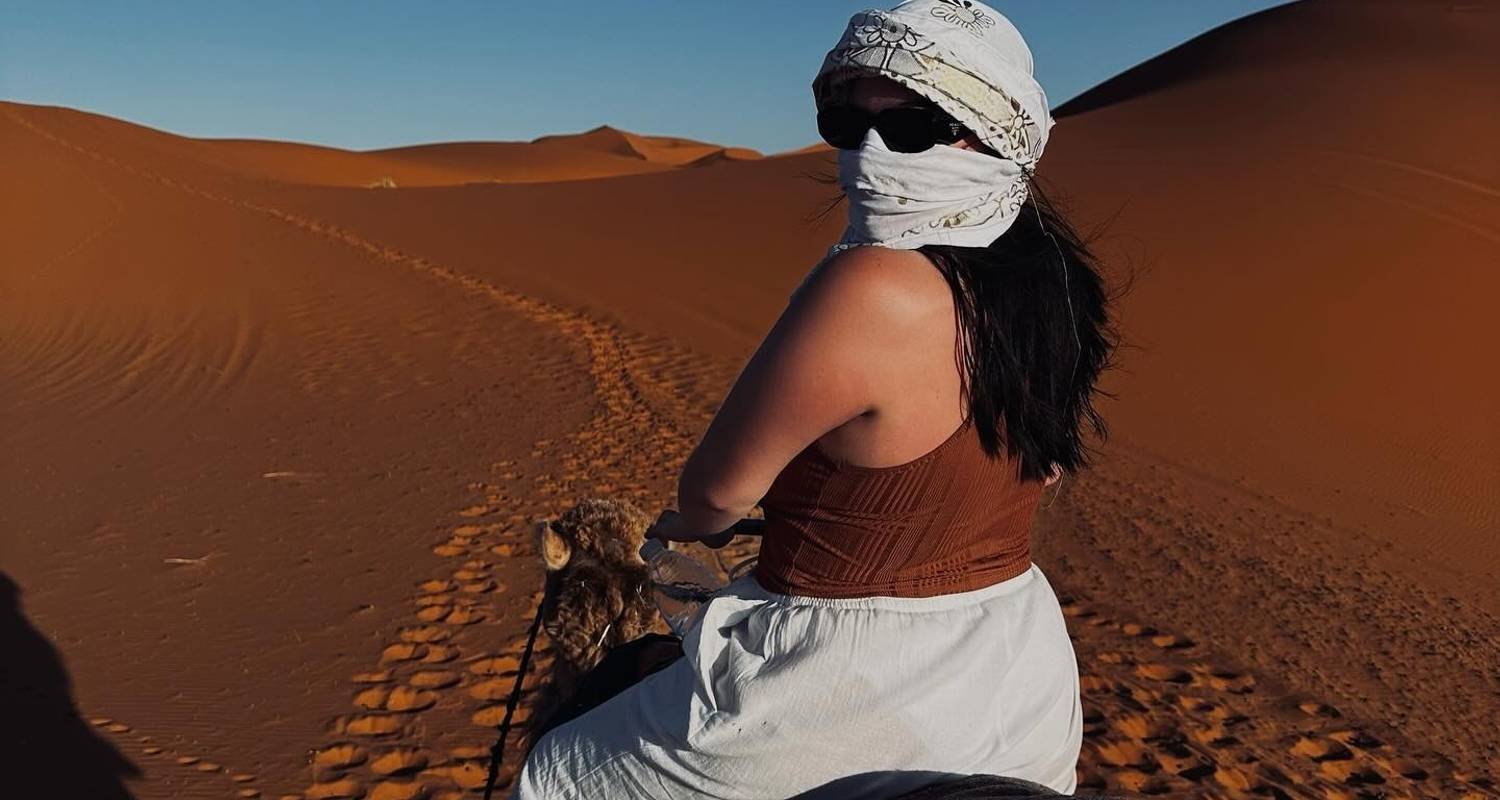
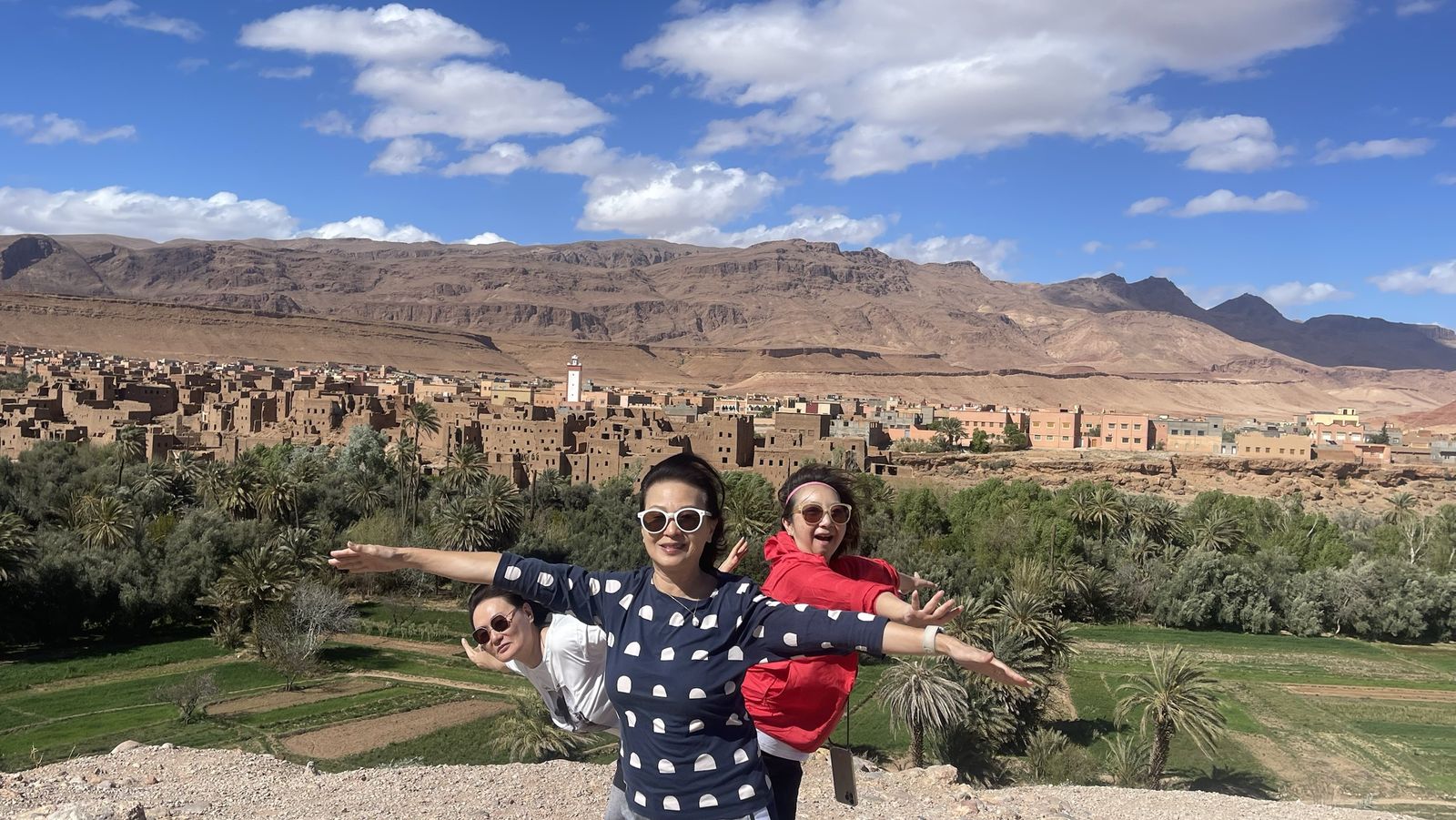
Spring is the favourite season of most of our travellers. Marrakech and Fes are warm during the day without being hot, and the valleys of the south are green. In the Sahara, days are pleasant and nights are cool, perfect for the camel ride and a night in the camp.
In May, the Rose Valley near Kelaat M'Gouna celebrates the rose harvest with a festival. Book early for Easter and the May holidays, when many Europeans travel.
Summer (June to August): the coast and the mountains
In summer, Marrakech, Fes and the south are very hot: the afternoon temperature often passes 38 °C, and more in the Sahara. Desert tours are still possible: we drive early in the morning, rest at midday and ride the camels at sunset, when the sand cools down.
Summer is the best time for the Atlantic coast and the mountains. Essaouira stays fresh thanks to the wind from the ocean, and the High Atlas villages around Imlil are pleasant for walking.
Autumn (September to November): the second best season
From mid-September the heat goes down, and October and November are excellent months for the whole country: warm days in the cities, golden light in the valleys and comfortable days in the dunes. Autumn is also the time of the date harvest in the oases of the south.
Winter (December to February): sunny days, cold nights
Winter days are often sunny and mild in Marrakech, but nights are cold everywhere inland. In the Sahara, nights can drop close to 0 °C: our desert camp has heating in every tent, and you need a warm jacket for sunset and sunrise.
Snow falls on the High Atlas. It is beautiful, but it can close the Tizi n'Tichka pass for a few hours or a day after a storm. We follow the road conditions every day and adapt the route if needed. Christmas and New Year are popular in the desert: book a few months ahead.
Travelling during Ramadan
The dates of Ramadan move about 11 days earlier every year; in 2027 it is expected around February and early March. Travelling is easy during Ramadan: monuments and tours run normally, restaurants for visitors stay open, and the atmosphere in the evening, after sunset, is very special. Some small cafés close during the day.
The best time for each region
If you already know where you want to go, these are the months we recommend:
- Marrakech: March to May and September to November
- Fes and Chefchaouen: April to June and September to October
- Sahara (Merzouga): March to May and October to November; winter is fine with warm clothes
- High Atlas walks: April to June and September to October
- Atlantic coast (Essaouira): all year, best from June to September
Frequently asked questions
What is the best month to visit Morocco?
April and October are often the best months: warm, sunny days and comfortable nights almost everywhere, including the Sahara.
Is it too hot to visit Morocco in summer?
Inland it is very hot from June to August, but the coast and the mountains are pleasant, and desert tours work well with early starts and the camel ride at sunset.
Can I visit the Sahara in winter?
Yes. Winter days are sunny and the light is beautiful, but nights are cold: bring a warm jacket. Our desert camp has heating in every tent.