By Mostapha Maazouz · Updated 29 October 2026
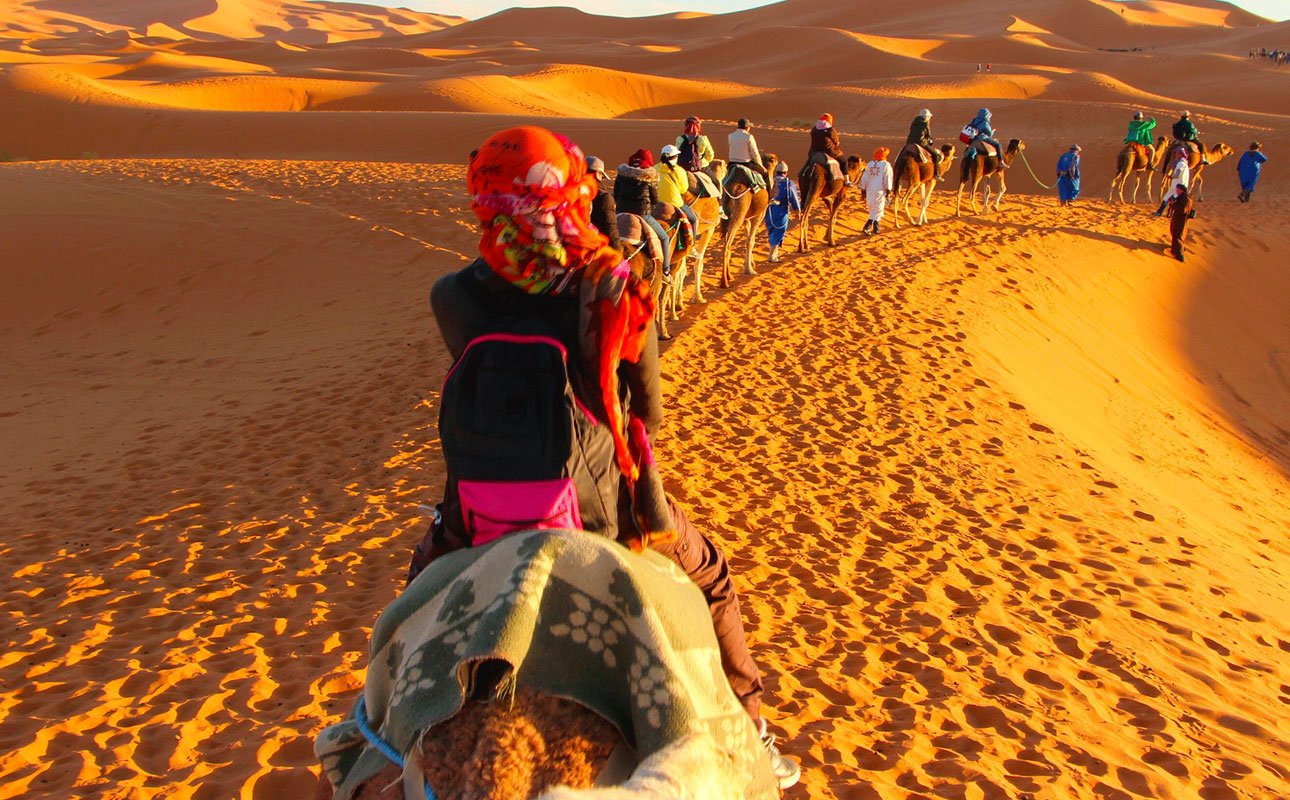
The short answer: the best time to visit the Sahara Desert in Morocco is spring (March to May) and autumn (late September to November). Days are warm and sunny, nights in the desert camp are pleasant, and the light on the dunes of Erg Chebbi is at its most beautiful.
But the desert can be visited all year round. Our team has been organising desert tours to Merzouga since 2009, and below we explain what each season is really like, so you can choose the dates that suit you best.
Spring (March – May): the favourite season
Spring is the most popular time for a Sahara tour. Daytime temperatures in Merzouga are usually between 22 °C and 32 °C, and nights are fresh but comfortable. The Atlas Mountains you cross on the way may still have snow on the peaks, while the valleys of Dades and Todra are green with almond and fruit trees.
Because it is high season, we recommend booking your desert tour a few weeks in advance, especially around Easter and the May holidays.
Summer (June – August): hot days, magical nights
In summer the desert is very hot: in the middle of the day it often goes above 40 °C. That does not mean you cannot go. We simply adapt the programme: camel rides start in the late afternoon for the sunset, and early in the morning for the sunrise, and you rest in the shade or by a pool during the hottest hours.
The big advantage of summer is the night: warm air, a clear sky and thousands of stars. Many families travel at this time because of the school holidays.
Autumn (September – November): golden light and fewer crowds
From late September the heat drops and the desert becomes very pleasant again. October and November are some of our favourite months: soft golden light on the dunes, warm days and calm nights. It is also date-harvest season in the palm groves of the Ziz and Tafilalet valleys.
Winter (December – February): sunny days, cold nights
Winter days in Merzouga are often sunny and around 15 °C to 20 °C, which is perfect for walking in the dunes. Nights, however, are cold and can drop close to 0 °C. Our desert camps provide thick blankets, and we always recommend a warm jacket, a hat and warm socks.
The roads over the High Atlas are open almost all year, but after heavy snow the Tizi n'Tichka pass can close for a few hours. Our drivers follow the conditions every day and adapt the route if needed.
Quick guide by month
- January – February: cool, sunny days; cold nights. Quiet season.
- March – May: ideal weather, high season, book early.
- June – August: very hot days; plan activities at sunrise and sunset.
- September: still hot at the start of the month, very pleasant at the end.
- October – November: excellent weather and beautiful light.
- December: sunny days, cold nights, busy around Christmas and New Year.
What about Ramadan and sandstorms?
During Ramadan, tours run normally: hotels, camps and restaurants for visitors stay open, and it is a special time to discover Moroccan traditions. Sandstorms can happen, mostly in spring, but they usually last a few hours. Your guide will always choose the safest moment for the camel ride.
Frequently asked questions
What is the best month to visit the Sahara in Morocco?
March, April, October and November usually offer the best balance: warm days, comfortable nights and great light for photos.
Is it too hot to visit the Sahara in summer?
Days are very hot (often above 40 °C), but tours are adapted: camel rides at sunset and sunrise, rest during the afternoon. The nights under the stars are wonderful.
How cold is the desert at night in winter?
In December and January, nights in Merzouga can drop close to 0 °C. Camps provide warm blankets; bring a warm jacket and a hat.