By Mostapha Maazouz · Updated 10 November 2026
Morocco is closer to the United States than most Americans think: from the East Coast it is a shorter flight than Hawaii is from New York. This practical guide answers the questions our American travelers ask most often before their first trip, from passports to power plugs.
Do U.S. citizens need a visa for Morocco?
No. U.S. citizens can visit Morocco as tourists for up to 90 days without a visa. Your passport must be valid for at least six months when you arrive and have at least one blank page for the entry stamp.
Rules can change, so check the latest entry requirements on travel.state.gov a few weeks before you travel.
Flights from the United States
Royal Air Maroc, Morocco's national airline, flies nonstop between Casablanca and several U.S. cities, including New York (JFK), Washington Dulles and Miami, and it started a route to Los Angeles in 2026. Many travelers also connect through European hubs such as Paris, Madrid, Lisbon or London, which can be a good way to fly straight into Marrakech or Fes.
Routes and schedules change every season, so compare options on the airlines' own websites. When you book, send us your flight numbers: we organize your airport pickup and adapt the first day of the itinerary to your arrival time.
- Casablanca (CMN): the main international hub, ideal for tours that start on the Atlantic coast and the imperial cities.
- Marrakech (RAK): the easiest start for the Atlas Mountains, Ait Ben Haddou and the Sahara.
- Fes (FEZ): perfect if you want to begin with the medina of Fes and continue to the desert.
- Errachidia (ERH): the closest airport to the Merzouga dunes, reached by domestic flights.
Time difference and jet lag
Morocco is usually 5 to 6 hours ahead of New York and 8 to 9 hours ahead of Los Angeles, depending on the season. During Ramadan Morocco sets its clocks back one hour, so check the time again if you travel in February or March 2027.
Overnight flights from the East Coast land in the morning. We recommend an easy first day, such as a relaxed visit of Casablanca or Marrakech, before the long drives toward the desert.
Money: dirhams, cards and tipping
The local currency is the Moroccan dirham (MAD). You can't buy it in advance in the United States, but ATMs are easy to find in every city and at the airports. Hotels, riads and larger restaurants accept credit cards; markets, small cafés and tips are paid in cash.
Tipping is customary, as in the U.S., but amounts are smaller. Round up in cafés, leave around 10% in restaurants, and plan a tip for guides and drivers at the end of a tour if you are happy with them.
Phones, internet and power plugs
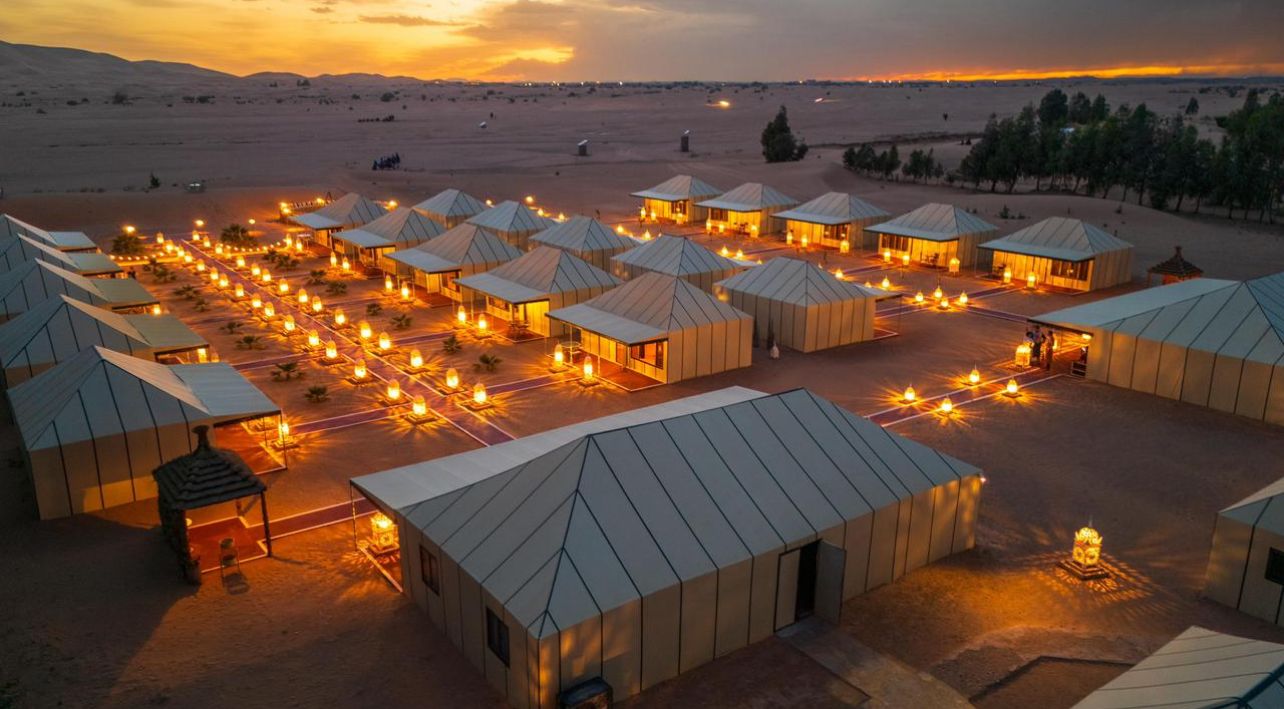
Most U.S. phones work in Morocco with an international plan, but a local SIM card or an eSIM is much cheaper for data. Wi-Fi is available in almost all hotels and riads, and even in many desert camps, although it can be slow in the dunes.
Morocco uses European plugs (types C and E) and 220 volts. Bring a plug adapter. Phone and laptop chargers usually accept both voltages, but hair dryers and straighteners from the U.S. often do not.
What to pack for Morocco
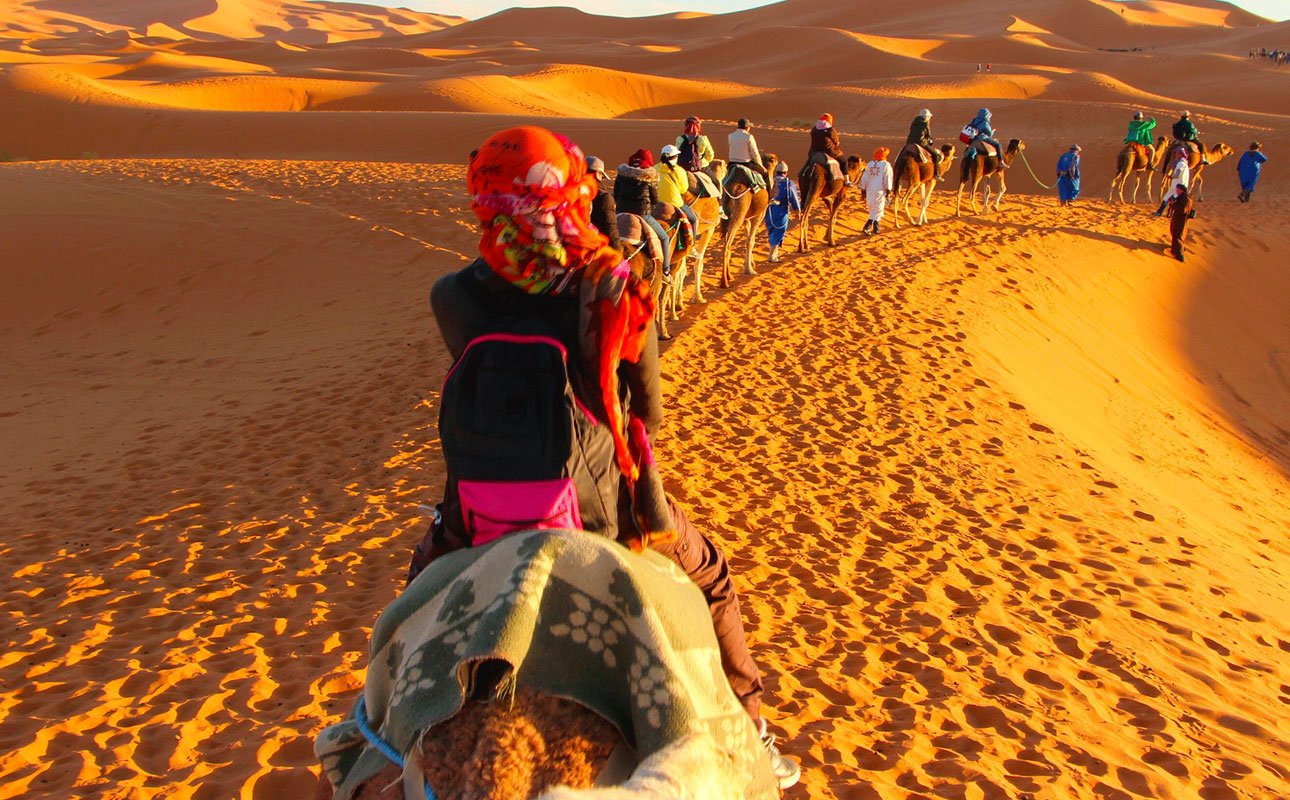
Pack light layers: days can be warm and desert nights cold, especially from November to March. Bring comfortable walking shoes for the medinas, a scarf or light jacket that covers the shoulders, sunglasses, sunscreen and a small backpack for the night in the desert camp.
Our founder's favorite months
"For me, the best periods are October, November, March and April," says Mostapha Maazouz, our founder, who grew up in the Sahara. "The weather is mild, the days are good for exploring and for activities, and the nights are beautiful for enjoying the silence and the stars in the desert. In summer the heat is very high, and we have to plan the activities with care, especially for families."
Best way to travel around Morocco
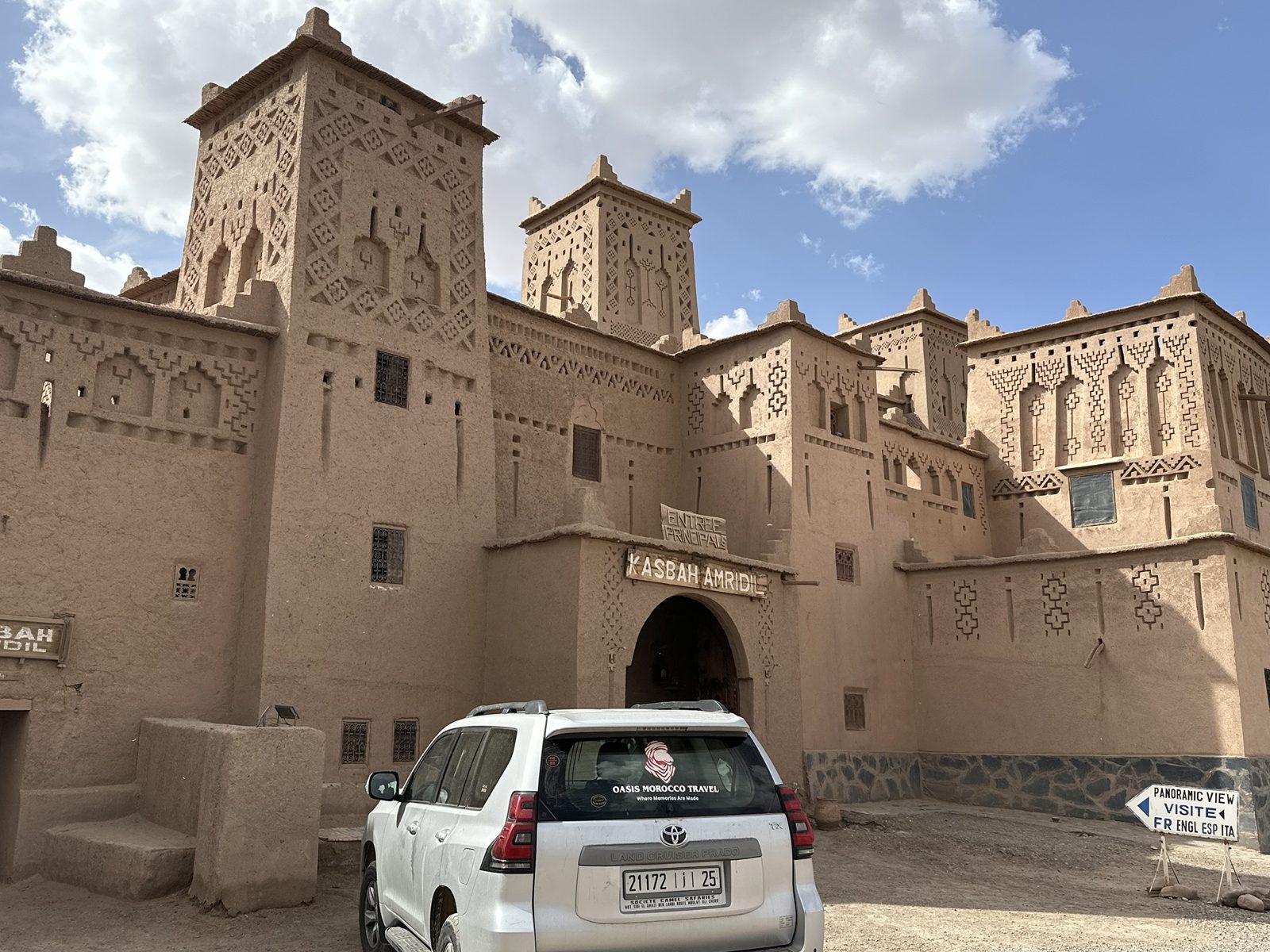
Distances are long and the most beautiful places, like the Sahara, the gorges and the kasbahs, are far from the train lines. A private tour with a driver lets you see the whole country at your own pace, with stops wherever you want. Tell us your dates, your arrival airport and your interests, and we design the route around your flights.
Frequently asked questions
Do I need a visa for Morocco with a U.S. passport?
No, not for tourist stays of up to 90 days. Your passport must be valid for at least six months on arrival and have one blank page.
Are there direct flights from the USA to Morocco?
Yes. Royal Air Maroc flies nonstop between Casablanca and several U.S. cities, including New York (JFK). Check the airline for current routes and schedules.
What is the time difference between Morocco and New York?
Usually 5 to 6 hours, depending on the season. Morocco moves its clocks back one hour during Ramadan.
Can I use U.S. dollars in Morocco?
Not in daily life. Prices are in Moroccan dirhams. Use ATMs in Morocco to withdraw dirhams and pay by card in hotels and larger restaurants.